 Image 1 of 1
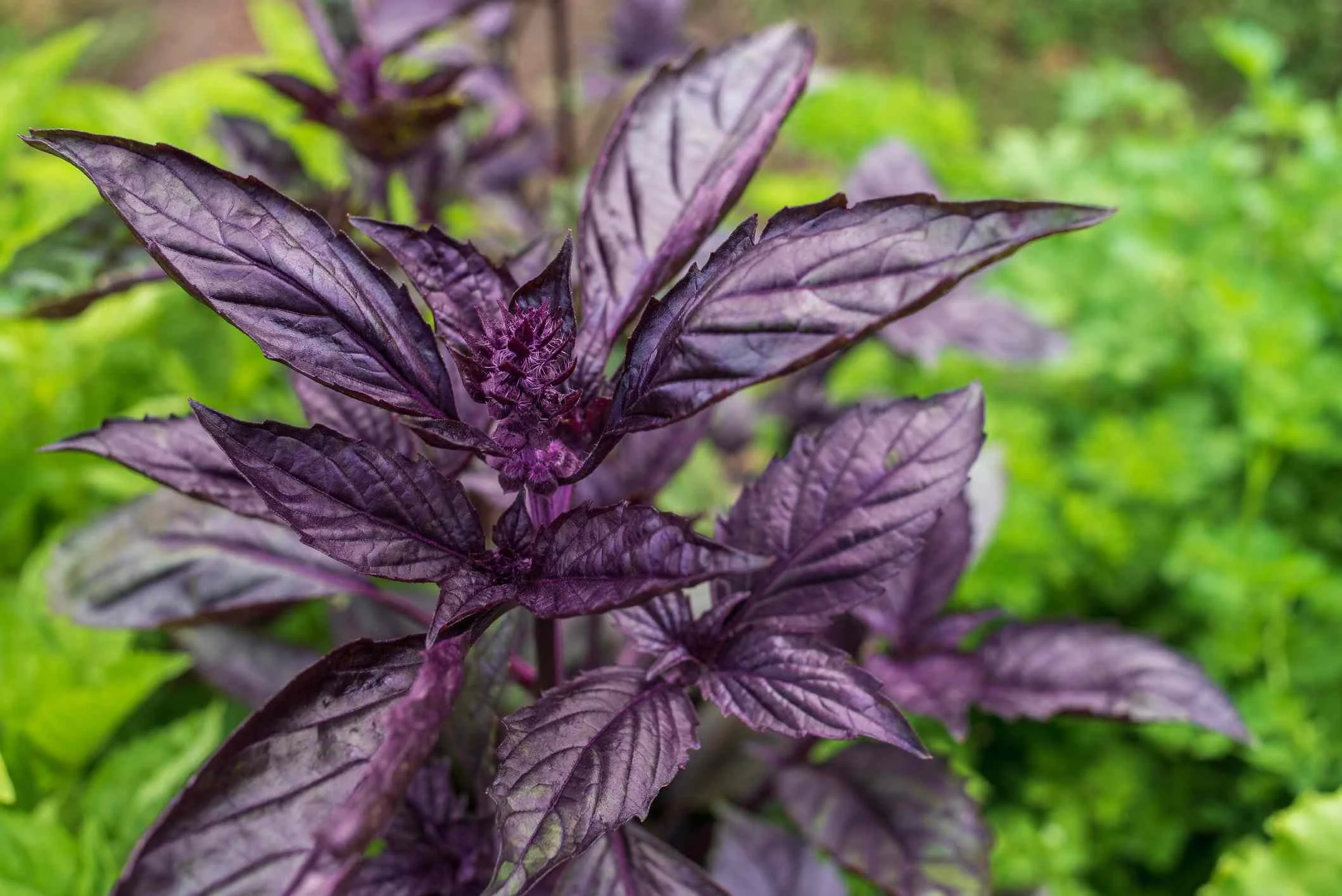
Purple basil is a fragrant, annual herb (12–24 inches tall) known for its deep purple foliage, which is rich in anthocyanin antioxidants. It thrives in full sun, warm weather, and well-drained, moist soil. Popular varieties like 'Dark Opal' and 'Purple Ruffles' are ideal for salads, pesto, and as ornamental garden borders, offering a subtle licorice/clove flavor.
Growing Conditions & Care
Light: Needs full sun (6–8 hours daily) to maintain its deep purple color.
Soil: Thrives in moist, well-drained, nutrient-rich soil, preferably with a pH of 6.5–7.5.
Watering: Keep soil consistently moist, but avoid waterlogged soil. Water at the base to prevent foliage disease.
Temperature: Highly sensitive to cold; plant outdoors only after all frost danger passes, when temperatures are above 50°F.
Maintenance: Pinch off the top sets of leaves regularly to encourage a bushier plant and prevent premature flowering, which can make the leaves bitter. [
Uses & Benefits
Culinary: Used in salads, pesto, vinegar, and as a garnish. Its flavor is described as a mixture of basil, anise, and mild clove.
Purple basil is a fragrant, annual herb (12–24 inches tall) known for its deep purple foliage, which is rich in anthocyanin antioxidants. It thrives in full sun, warm weather, and well-drained, moist soil. Popular varieties like 'Dark Opal' and 'Purple Ruffles' are ideal for salads, pesto, and as ornamental garden borders, offering a subtle licorice/clove flavor.
Growing Conditions & Care
Light: Needs full sun (6–8 hours daily) to maintain its deep purple color.
Soil: Thrives in moist, well-drained, nutrient-rich soil, preferably with a pH of 6.5–7.5.
Watering: Keep soil consistently moist, but avoid waterlogged soil. Water at the base to prevent foliage disease.
Temperature: Highly sensitive to cold; plant outdoors only after all frost danger passes, when temperatures are above 50°F.
Maintenance: Pinch off the top sets of leaves regularly to encourage a bushier plant and prevent premature flowering, which can make the leaves bitter. [
Uses & Benefits
Culinary: Used in salads, pesto, vinegar, and as a garnish. Its flavor is described as a mixture of basil, anise, and mild clove.